
Executive Summary
Inwood, Manhattan's northernmost neighborhood, spans from Dyckman Street to the Harlem River and offers residential properties at prices 50-60% below Midtown Manhattan. The area features Inwood Hill Park (196 acres of natural forest), direct A express train access (28 minutes to Midtown), and a housing stock dominated by pre-war Art Deco buildings and Tudor-style co-ops.
December 2025 Market Snapshot
StreetEasy Data$450K
Median Asking Price
+26.8% YoY
$435K
Last Recorded Sale
(Jul 2024)
$450K
Median Co-op Asking
+27.7% YoY
37
Active Listings
+12.1% YoY
35
Co-op Inventory
+9.4% YoY
3-9/mo
Sales Volume
Note: Inwood has limited sales transaction data due to lower volume. Asking prices provide the most current market indicator. Last recorded median sale: $435,000 (July 2024).
vs. Manhattan Overall:
Source: StreetEasy Master Report (January 2025). Live data available at miltoncoste.com/market-report/inwood
Browse Inwood Listings
View real-time co-ops, condos, and multi-family properties with live RLS data
Current Market Conditions (January 2026)
Residential Sales Data
| Property Type | Price Range | Median Price | Typical Size |
|---|---|---|---|
| Studio Co-op | $160K–$240K | $195,000 | 400–500 sq ft |
| 1BR Co-op | $220K–$340K | $265,000 | 550–700 sq ft |
| 2BR Co-op | $310K–$480K | $375,000 | 800–1,000 sq ft |
| 1BR Condo | $340K–$520K | $425,000 | 600–750 sq ft |
| 2BR Condo | $480K–$680K | $565,000 | 850–1,100 sq ft |
| 3BR Condo | $650K–$920K | $765,000 | 1,100–1,400 sq ft |
Multi-Family Investment Properties
| Building Type | Price Range | Cap Rate | Rental Yield |
|---|---|---|---|
| 2-Family | $1.1M–$1.9M | 4.8–5.8% | $4,200–$5,800/mo per unit |
| 3-Family | $1.6M–$2.5M | 5.2–6.2% | $4,000–$5,200/mo per unit |
| 4-Family+ | $2.0M–$3.2M | 5.5–6.8% | $3,600–$5,000/mo per unit |
Neighborhood Geography
Key Sub-Areas
Inwood Hill Park Area (Payson Avenue to Park)
- Proximity: Inwood Hill Park (0.1–0.4 miles)
- Building Types: Pre-war co-ops, Tudor-style buildings
- Character: Residential streets with tree canopy
- Elevation: Varied terrain, elevated sections
Central Inwood (Broadway Corridor)
- Density: Medium to high-density residential
- Building Stock: 1930s–1950s Art Deco co-ops
- Commercial: Broadway retail corridor (207th–215th Streets)
- Transit: A train at 207th Street, 1 train at 207th/215th
Academy Street Corridor
- Character: Residential streets
- Building Types: Pre-war co-ops, low-rise buildings
- Proximity: Educational institutions nearby
- Transit: A train access within 0.3–0.6 miles
Marble Hill (Geographic Inwood)
- Location: East of Broadway, north of 225th Street
- Transit: Metro-North (Marble Hill Station), 1 train (225th St)
- Building Types: Mix of pre-war and post-war construction
- Note: Geographically part of Bronx, politically part of Manhattan
Explore by Sub-Area
Transportation Infrastructure
Subway Access
- A Train (Express): 28 minutes to Columbus Circle (59th St), 33 minutes to Penn Station
- A Train (Local Stop): 207th Street (terminal station, major hub)
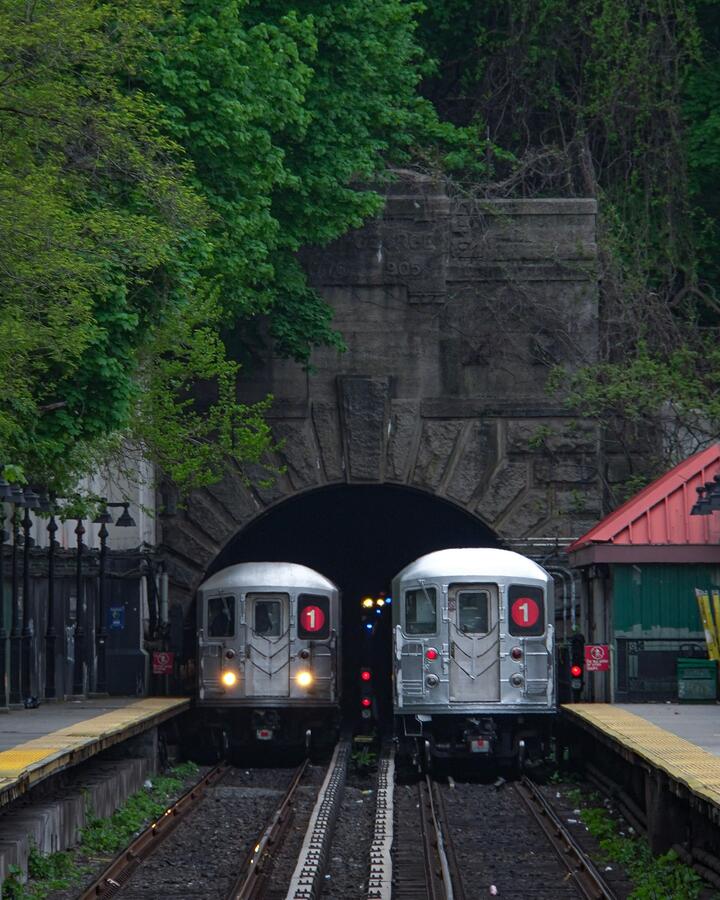
- 1 Train: 207th Street, 215th Street (local service)
Metro-North Access
- Marble Hill Station: 20–25 minutes to Grand Central Terminal
- Service: Hudson Line trains (peak and off-peak)
- Frequency: Every 30–60 minutes depending on time of day
Average Commute Times
- To Midtown (50th/Broadway): 28–33 minutes (A express)
- To Grand Central: 20–25 minutes (Metro-North from Marble Hill)
- To Financial District: 50–55 minutes (A to Fulton Street)
- To Brooklyn (Downtown): 60–65 minutes (transfer at Jay St)
Parks and Natural Areas
Inwood Hill Park (196 Acres)
- Features: Natural forest, salt marsh, hiking trails, sports fields
- Historic Sites: Native American caves, last natural forest in Manhattan
- Recreation: Basketball courts, baseball fields, playgrounds, dog run
- Water Access: Hudson River waterfront, kayak launch
Other Green Spaces
- Fort Tryon Park: Adjacent to south (67 acres), The Cloisters museum
- Isham Park: 20 acres, elevated terrain, athletic fields
- Gorman Park: Playground and recreational facilities
Waterfront Access
- Hudson River Greenway (bike path runs through neighborhood)
- Spuyten Duyvil waterfront (kayaking, fishing)
- Harlem River waterfront access
Real Estate Considerations
Building Types and Characteristics
Pre-War Co-ops (1920s–1940s)
- Architectural Styles: Art Deco, Tudor Revival, Georgian
- Construction: Brick and stone, 5–7 stories
- Typical Maintenance: $700–$1,100/month (1BR)
- Features: Hardwood floors, high ceilings, crown molding, some with elevators
- Pet Policy: Varies by building (verify with managing agent)
Post-War Co-ops (1950s–1970s)
- Construction: Concrete and brick, 8–12 stories
- Typical Maintenance: $600–$900/month (1BR)
- Features: Select buildings with doorman, on-site parking (limited)
- Layouts: More standardized floor plans
Co-op Board Requirements
- Debt-to-Income Ratio: Typically 28–33% maximum
- Post-Purchase Liquidity: 1–2 years reserves (maintenance + mortgage)
- Down Payment: 10–20% minimum (varies by building)
- Financial Review: 2 years tax returns, bank statements, employment verification
- Flip Tax: 0–3% of sale price (check building bylaws)
Investment Properties
Multi-family homes with 4.8-6.8% cap rates in Inwood
Investment Analysis (Q4 2025)
2-Family Properties
- Median Price: $1,500,000
- Gross Rental Income: $100,800–$139,200/year
- Operating Expenses: 35–40% of gross income
- Net Operating Income: $63,000–$84,000/year
- Cap Rate: 4.8–5.8%
Rental Rate Benchmarks (Per Unit)
- Studio: $1,500–$1,900/month
- 1BR: $1,800–$2,400/month
- 2BR: $2,300–$3,000/month
- 3BR: $2,800–$3,600/month
Frequently Asked Questions
What are current crime trends in Inwood?
NYPD CompStat data for the 34th Precinct shows overall crime decreased 28% from 2020 to 2025. Violent crime decreased 35% and property crime decreased 22% during the same period. Current statistics are available at nyc.gov/nypd and updated quarterly by the NYPD.
How long is the commute to Midtown Manhattan?
The A express train provides 28-minute service from 207th Street to Columbus Circle (59th St). Total commute time to Midtown (50th/Broadway area) is approximately 28–33 minutes including walking time. The A train runs 24 hours. Metro-North service from Marble Hill station offers an alternative route to Grand Central Terminal (20–25 minutes).
What should I know about co-ops in Inwood?
Co-op boards in Inwood typically require 10–20% down payment, debt-to-income ratio below 33%, and 1–2 years of post-purchase reserves. Board review process includes financial documentation (tax returns, bank statements), employment verification, and personal interviews. Pet policies, subletting rules, and flip taxes vary by building. Review the building's proprietary lease and financial statements before making an offer.