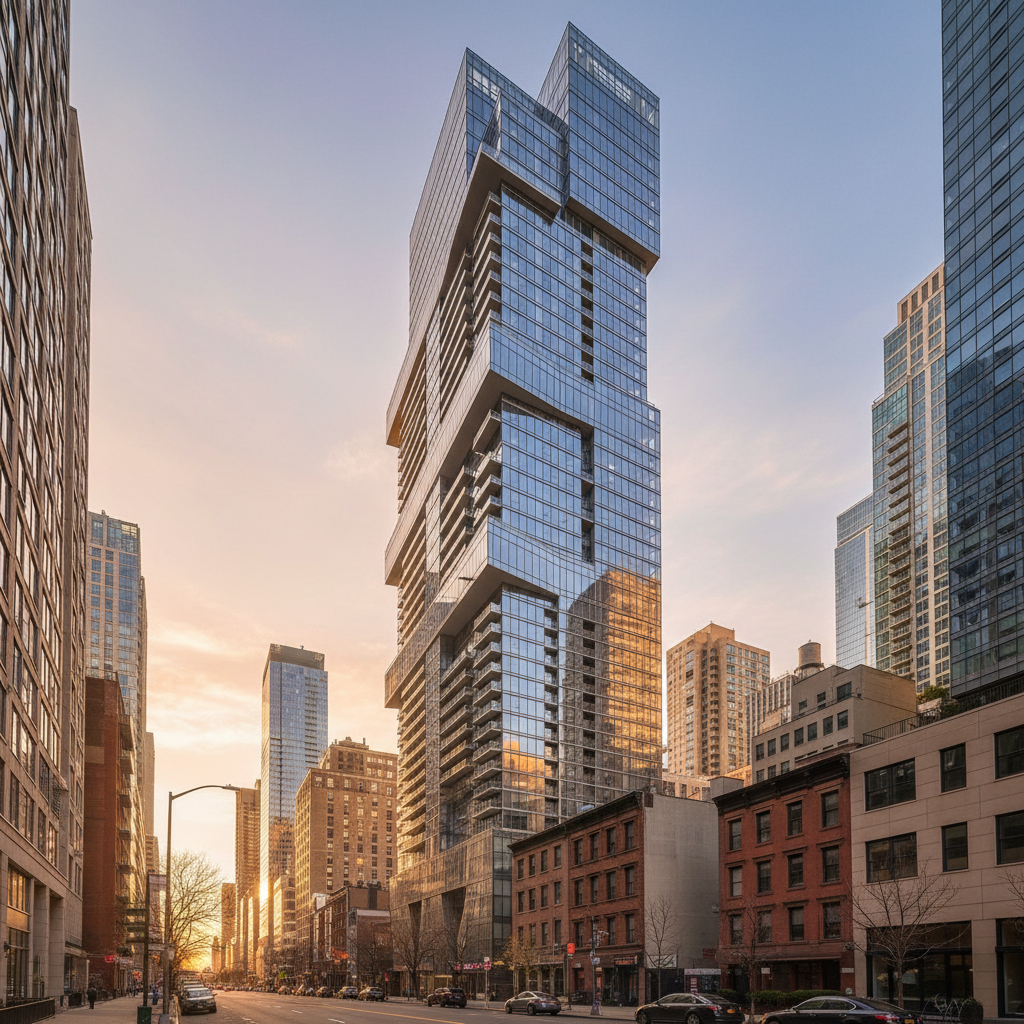
J-51 expires June 30, 2026, and as of this writing the New York State Senate Finance Committee has not yet scheduled a floor vote on renewal. For thousands of co-op and condo owners across Manhattan, Brooklyn, and the Bronx, that deadline is not abstract: it translates directly into higher monthly maintenance fees and carrying costs starting in the third quarter of this year.
I have been selling co-ops in Upper Manhattan for over 25 years, and J-51 is one of those programs most buyers never think about until it touches their wallet. When a building loses its J-51 abatement, the tax savings that were embedded in the monthly maintenance disappear. Boards pass the increase through. Owners notice. Buyers renegotiate.
What J-51 Actually Does
J-51 is a New York City property tax exemption and abatement program created under Administrative Code Section 11-243. It was originally designed to encourage residential rehabilitation of older housing stock. Over decades it expanded to cover elevator modernization, facade work, boiler replacements, and other capital improvements in qualifying buildings, including many co-ops and condominiums built before 1974.
The program works on two tracks. The exemption freezes the portion of assessed value attributable to the qualifying improvement for up to 34 years. The abatement reduces the tax bill itself by a percentage of the certified reasonable cost of the improvement, spread over 12 to 20 years depending on building type and project scope.
For co-op shareholders, the benefit shows up in a lower per-unit maintenance charge. For condo owners, it appears as a reduced property tax line on the annual bill. In both cases, expiration means that benefit disappears and the full assessed value becomes taxable at the current rate.
The June 2026 Sunset
The J-51 program authorization expired under state law on June 15, 2022, but the Legislature passed a temporary extension through June 30, 2026, to allow time for a permanent reform package. That extension is the one now approaching its end date.
Albany's Senate Finance Committee has been holding hearings on a broader affordable housing package that includes J-51 renewal alongside 485-x (the replacement for 421-a) and the City of Yes housing provisions. As of April 2026, no vote date has been announced. The Assembly passed its version of a housing omnibus in February, but the two chambers remain far apart on income targeting requirements for J-51 buildings.
If no extension passes before June 30, the program sunsets without replacement. New applications stop being accepted. Buildings currently receiving abatements continue to receive the portion already certified, but no new certifications are processed. The practical impact falls hardest on buildings that were mid-project or planning a capital campaign for 2026 and 2027.
Key Dates to Watch
June 30, 2026: J-51 program authorization expires under current extension. Spring 2026 budget window: The Legislature's best remaining opportunity to include renewal in the budget or a standalone housing bill before session ends. Q3 2026: First tax bills reflecting post-J-51 assessed values would begin reaching owners if no extension passes.
Which Buildings Are Most Exposed
Not every co-op and condo building receives J-51 benefits. Eligibility has always depended on building age, improvement type, and filing status. The buildings most exposed to the June 2026 sunset fall into three groups.
First, buildings that completed major capital work between 2020 and 2024 and filed J-51 applications that are still in the certification pipeline. If those certifications are not finalized before the sunset, the abatement period may be shortened or lost entirely depending on how the Department of Finance handles the transition.
Second, older pre-war elevator buildings, particularly in Upper Manhattan, the Bronx, and central Brooklyn, that have been relying on J-51 abatements to keep maintenance fees competitive. Washington Heights co-ops, where the median price runs between $425,000 and $525,000 per unit as of Q1 2025, often have thin maintenance margins. A 10 to 15 percent increase in the tax component of maintenance would be felt immediately by shareholders.
Third, mid-century buildings that used J-51 to finance elevator modernization or Local Law 11 facade work and are now approaching the end of their abatement period anyway. For these buildings, the sunset accelerates a transition that was already coming.
| Building Type | Typical J-51 Benefit | Exposure Level |
|---|---|---|
| Pre-war co-op, pre-1947 construction | Exemption on improvement value, 20-yr abatement | High |
| Post-war elevator co-op, 1948-1973 | Abatement on elevator/facade work | Medium |
| Condo, converted from rental post-1974 | Varies by conversion agreement | Medium |
| New construction condo (post-2000) | Usually 421-a, not J-51 | Low |
| HDFC co-op | May hold separate HDFC tax benefit; J-51 additional | Medium |
NYC Co-ops for Sale
Active co-op listings that may benefit from J-51 abatements
133-131 W 28th Street #2A
Chelsea
425 E 78th Street #6F
Upper East Side
Listing information provided courtesy of the Real Estate Board of New York's Residential Listing Service (RLS). Information is deemed reliable but not guaranteed. Sale listings verified. ©2026 REBNY. RLS data displayed by Keller Williams NYC.
What This Means for Buyers Right Now
With NYC median sale prices at $850,000 as of December 2025, up roughly 15 percent from $740,000 in March 2024, buyers are already stretching. Manhattan co-op prices ranged from $772,000 to $894,000 in Q1 2025. Manhattan condos ran $1.6 million to $1.69 million over the same period. Against those price points, a $200 or $300 monthly increase in maintenance is not trivial; it affects debt-to-income calculations and board approval thresholds.
Buyers looking at co-ops right now should ask the managing agent two specific questions. First, does the building currently receive a J-51 abatement? Second, if yes, what is the certified abatement end date and what is the projected monthly maintenance impact when it phases out? Both answers should be in the board package or obtainable from the managing agent before you sign a contract.
For buyers interested in Washington Heights or Inwood co-ops specifically, ask about J-51 status before you fall in love with a price point. Several large pre-war buildings in those neighborhoods have active abatements that will matter to resale value.
Buying a Co-op Before the J-51 Deadline?
I can pull the tax abatement history on any building you are considering and walk you through exactly what changes after June 30.
Schedule a Free ConsultationWhat Existing Owners Should Do Before June 30
If you already own in a J-51 building, the first step is to contact your building's managing agent and board treasurer to understand the current abatement schedule. Many boards have not yet communicated to shareholders how the sunset will affect the maintenance budget. Get ahead of it.
If your building has capital projects planned for 2026 or 2027 that were intended to qualify for J-51, your board should be talking to a tax certiorari attorney now. There are two scenarios worth modeling: one where an extension passes before June 30, and one where it does not.
Buildings considering Local Law 97 compliance upgrades should also factor in the J-51 status. Local Law 97 carbon caps take effect in 2024 with escalating penalties through 2030. Many of the capital improvements that would reduce carbon emissions (boiler conversions, window replacements, HVAC upgrades) would have qualified for J-51 abatements. Without the program, the after-tax cost of compliance work rises.
The Legislative Outlook
Albany's track record on housing legislation is one of last-minute extensions rather than structural reform. The 421-a program expired in 2016, was extended as Affordable New York in 2017, lapsed again in 2022, and was replaced by 485-x in 2024 after a two-year gap. J-51 could follow a similar path: a short-term extension kicking the deadline to 2027 or 2028 while the Legislature negotiates income targeting and affordability requirements.
Watch for movement in May 2026, when the Legislature typically pushes through end-of-session housing deals. For now, assume the June 30 deadline is real and plan accordingly.
More context on how NYC tax incentive changes affect property values is in the co-op buying guide and in the broader Q4 2025 market recap.
Get a Pre-Expiration Property Review
Whether you are buying, selling, or already own in a co-op building, I can help you understand exactly how the J-51 sunset affects your specific situation before the June 30 deadline.
Talk to Milton