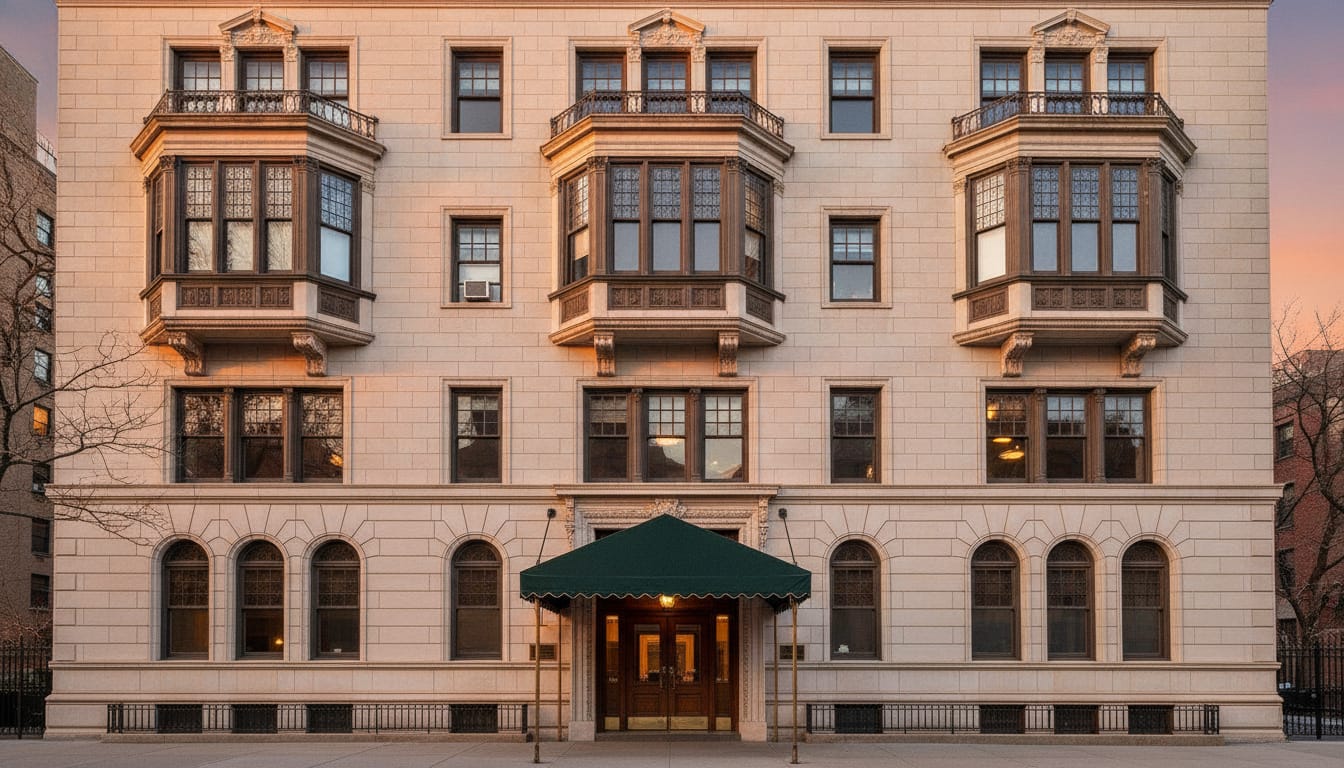
At 22,366 active listings, NYC sits at a 28-year inventory low. What is driving the shortage and what it means for buyers in May 2026.
Milton Coste, Licensed Real Estate Associate Broker•Keller Williams NYC•NY Lic. #10301213304
May 19, 2026• 6 min read•25+ Years Experience
New York City had 22,366 active residential listings in early 2026, the lowest count in 28 years of tracked data. For context, a balanced market in NYC historically runs between 35,000 and 45,000 active listings. At current levels, the city has roughly half the inventory it needs to give buyers a real choice. Understanding why supply is this constrained tells you more about NYC real estate than almost any other data point.
In my 25+ years selling across all five boroughs, I have never seen sustained inventory pressure quite like this. The causes are structural, not cyclical, which means buyers should not wait for a flood of new listings to hit the market.
The Three Structural Causes of the Shortage
1. Seller Lock-In From Pandemic-Era Mortgage Rates
Roughly 40% of all outstanding NYC residential mortgages were originated between 2020 and 2022 at rates between 2.75% and 3.5%. The average 30-year rate in early 2026 sits between 6.8% and 7.1%. A homeowner with a 3% mortgage who sells faces a new mortgage at more than double their current rate on whatever they buy next. For a $1 million loan, that rate difference adds approximately $2,400 to $2,600 per month in carrying cost. Many owners are staying put rather than absorbing that payment shock, even if their lives would otherwise have prompted a move.
2. Rent Stabilization Locking Up Co-Op and Condo Stock
New York has approximately 1.06 million rent-stabilized apartments. Many individual co-op owners and small landlords who might otherwise sell their properties cannot generate returns that justify a sale or redevelopment when rent increases are capped by the Rent Guidelines Board. The 2024 RGB order allowed increases of 2.75% for one-year leases and 5.25% for two-year leases, far below actual cost inflation in most buildings. This dynamic keeps apartment inventory off the market, particularly in older Manhattan and Brooklyn co-op buildings where individual shareholders hold units as long-term rentals.
3. Estate Holdings and Inherited Properties
NYC has a significant stock of properties held in estates, trusts, and multi-generational family ownership. These properties often sit off the active market for years during probate, family decision-making, or because the carrying costs on a paid-off property are low enough that heirs see no urgency to sell. Manhattan, in particular, has a large concentration of estate-held apartments that never hit the open market, feeding directly into inventory suppression. Executors and heirs who do decide to sell face a distinct set of legal and procedural steps; see the NYC selling inherited property guide for the full process.
NYC Inventory Snapshot: Early 2026
Active listings: 22,366 (28-year low)
Historical balanced market range: 35,000 to 45,000 listings
Manhattan: approximately 8,200 active listings (below 5-year average by 31%)
Brooklyn: approximately 6,400 active listings (below 5-year average by 24%)
Queens: approximately 5,800 active listings (closest to historical norm at 11% below)
What Low Inventory Means for Buyers
Low inventory does not mean prices are rising uniformly. Manhattan saw median prices fall 3.2% in Q4 2025 as affordability constraints hit the top of the market. What it does mean is that well-priced properties in in-demand buildings attract multiple offers quickly, while overpriced or problematic listings sit. The distribution is sharper: good properties move fast, and bad properties sit longer than they ever did in a higher-inventory environment.
For buyers, the implication is preparation. Getting pre-approved, having an attorney on retainer, and being ready to submit a complete offer within 24 to 48 hours of seeing a property are now baseline requirements, not optional upgrades. Review the NYC Buyer Guide for the full pre-approval and offer process.
Where Inventory Is Least Scarce
Not all neighborhoods are equally affected. Queens consistently shows the most inventory relative to its historical norm, particularly in Flushing, Jamaica, and the outer neighborhoods of eastern Queens. The Bronx, while smaller in absolute terms, has also maintained relatively healthier inventory ratios compared to Manhattan and Brooklyn. New development in Long Island City and Greenpoint has added condo supply that partially offsets resale inventory tightness in those areas.
Borough / Area
Inventory vs. 5-Year Avg
Relative Buyer Conditions
Manhattan
-31%
Most competitive for well-priced units
Brooklyn
-24%
Very competitive, especially brownstone areas
Queens
-11%
Best buyer conditions in the city
The Bronx
-13%
Reasonable selection, especially co-ops
Staten Island
+4%
Only borough with above-average inventory
What's Available Right Now
Active listings across NYC despite tight inventory
There is no catalyst on the immediate horizon that would push NYC inventory back to historical norms. Mortgage rates would need to fall to the 5.5% range to meaningfully unlock seller lock-in, and most forecasts for 2026 do not show that happening. Rent stabilization reform at the state level is politically unlikely in the current Albany environment. Estate settlement patterns are demographic, not cyclical.
New construction is the one offset. Approximately 14,000 new residential units are projected for delivery across the five boroughs in 2026, concentrated in Queens and Brooklyn. That supply helps at the margins but does not close a gap of 15,000 to 22,000 missing resale listings.
Finding Your Home in a Tight Market
Milton works with buyers across all five boroughs and has access to off-market and pre-market inventory that never hits the public portals.
The practical takeaway for buyers is this: stop waiting for the market to soften dramatically and start building relationships with brokers who have access to off-market inventory. The gap between what is listed publicly and what is available to buyers with the right connections has never been wider. Browse current NYC listings and check the neighborhood market reports to identify where supply is most accessible relative to your budget.
More What's Available Right Now
Active listings across NYC despite tight inventory
Send the address you are looking at. The report covers what the listing leaves out: the recorded sale history, the tax and abatement picture, open building violations and permits, and the closed sales that set the price. Milton prepares it from public records. No obligation.