NYC's 10 Hottest Neighborhoods of 2025: The 3 Still on Fire in 2026
Months of supply, not search clicks: a transaction-based ranking of NYC's tightening markets, with Q1 2026 data showing which trends are holding.
Milton Coste, Licensed Real Estate Associate Broker•Keller Williams NYC•NY Lic. #10301213304
May 19, 2026• 8 min read•25+ Years Experience
Boerum Hill recorded 194 closed sales in 2025, nearly double the 100 from 2024. Months of supply dropped from 6.3 to 3.6, the steepest tightening of any qualifying NYC neighborhood. And Q1 2026 sales are still up 67% year over year, even with mortgage rates climbing back above 7.5% in February.
After 25+ years closing co-op and condo deals across all five boroughs, I have watched plenty of "hot neighborhood" lists come and go. The ones that hold up share one thing: a tightening absorption rate. That is what this analysis tracks, and it is why the ranking below looks different from what you will read on StreetEasy this week.
Why Months of Supply Beats Search Interest
StreetEasy's annual "neighborhoods to watch" list ranks by search queries. Search interest measures curiosity at the top of the funnel: shoppers typing a neighborhood name into a box. It does not measure whether anyone closed a deal.
Months of supply (MoS) measures actual transaction velocity. The formula is simple: average monthly active inventory divided by average monthly closed sales. The output is the number of months it would take to clear current inventory at the current pace of sales.
Reading Months of Supply
Under 5 months: seller's market. Multiple offers common, list-to-sale ratios near or above 100%.
5 to 7 months: balanced market. Negotiating room on both sides.
Above 7 months: buyer's market. Price reductions, concessions, longer days on market.
A neighborhood with falling MoS is absorbing inventory faster than new listings are arriving. That is the signal that matters when you are deciding where to buy, where to list, and what offer strategy to bring. Curiosity does not close deals; absorption does.
The Top 10 NYC Neighborhoods Where Inventory Tightened Most in 2025
Ranked by largest year-over-year reduction in months of supply between 2024 and 2025. Filter: at least 100 closed sales in 2025 AND 2024 MoS of 2.0 months or higher (excludes micro-markets and already-saturated tight markets). 67 of 177 NYC neighborhoods qualified.
#
Neighborhood
Borough
Sales 2024 to 2025
MoS 2024 to 2025
2025 Sale/List
Q1 2026 vs Q1 2025
1
Boerum Hill
Brooklyn
100 to 194 (+94%)
6.3 to 3.6 (-43%)
98.2%
+67%
2
Bath Beach
Brooklyn
119 to 157 (+32%)
4.7 to 2.9 (-39%)
96.3%
-15%
3
Coney Island
Brooklyn
120 to 118 (-2%)
5.7 to 4.0 (-30%)
97.8%
-32%
4
Sunset Park
Brooklyn
234 to 244 (+4%)
4.0 to 2.9 (-28%)
95.0%
-7%
5
West Village
Manhattan
330 to 397 (+20%)
6.2 to 4.5 (-28%)
96.5%
-9%
6
Fort Greene
Brooklyn
94 to 112 (+19%)
5.1 to 3.7 (-28%)
97.7%
-4%
7
Bensonhurst
Brooklyn
246 to 282 (+15%)
3.8 to 2.9 (-23%)
94.0%
-15%
8
Tribeca
Manhattan
308 to 360 (+17%)
8.6 to 6.7 (-22%)
94.5%
-9%
9
Gravesend
Brooklyn
402 to 401 (flat)
5.4 to 4.2 (-22%)
93.4%
+14%
10
Woodside
Queens
263 to 320 (+22%)
4.6 to 3.6 (-21%)
95.3%
-14%
Gold-highlighted rows still posted positive Q1 2026 momentum. Read on for the per-neighborhood breakdown and an honorable mention.
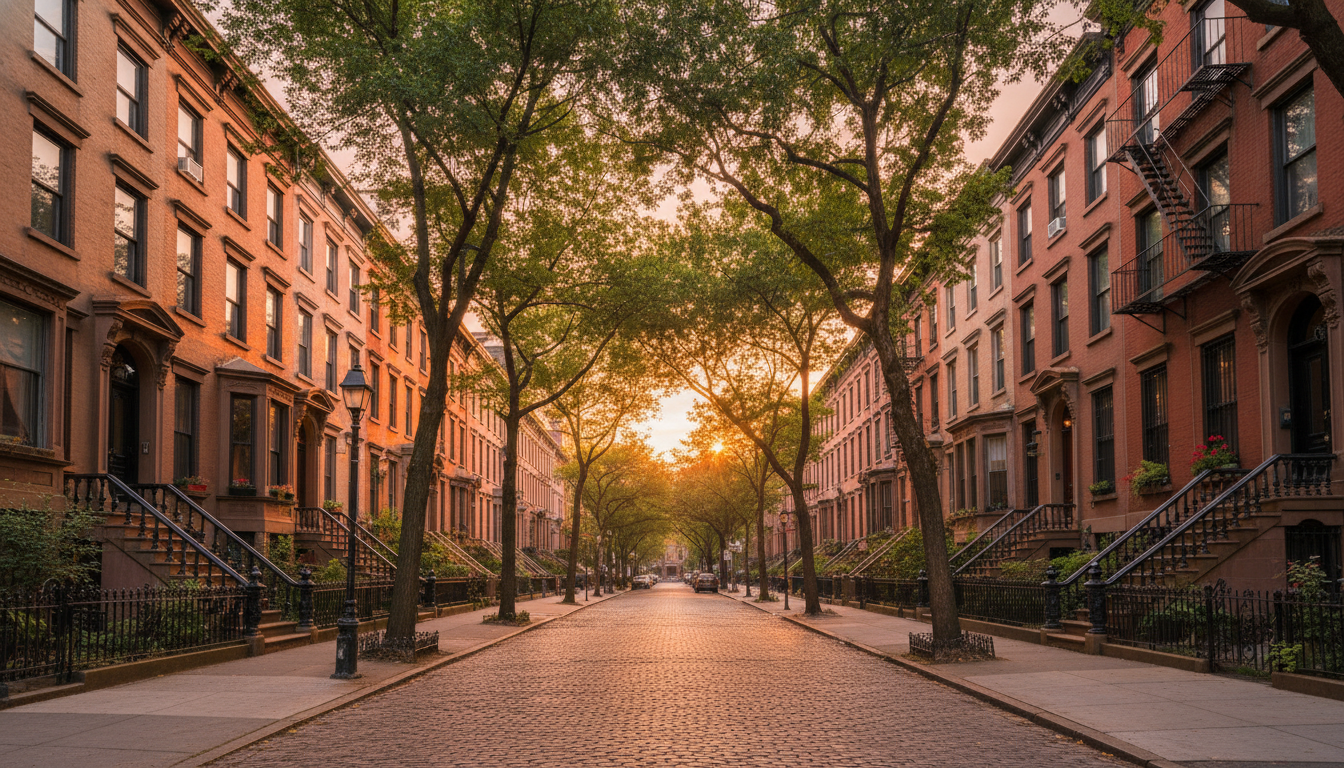
Sales nearly doubled (100 to 194), MoS collapsed from 6.3 to 3.6 months. Boerum Hill is the headline neighborhood of 2025 and the only Manhattan-adjacent Brooklyn market on this list still accelerating in 2026.
The mechanics: tight pre-war townhouse and boutique condo inventory, walkable to four subway lines at Atlantic-Barclays, and direct access to Cobble Hill, Brooklyn Heights, and Downtown Brooklyn employment. When inventory finally hit the market in 2025 after several thin years, buyers cleared it at close to ask (98.2% sale-to-list).
What makes Boerum Hill unusual is the Q1 2026 follow-through: 40 closed sales versus 24 in Q1 2025, a 67% jump while seven of the other top-10 markets cooled. That is not curiosity, that is conversion. If you are buying here in spring 2026, expect competition and price escalations on well-priced units. If you are listing, this is the strongest pricing environment Boerum Hill has seen since 2022.
Sales up 32% (119 to 157), MoS from 4.7 to 2.9. South Brooklyn waterfront with two-family and small-condo inventory at a sub-million price point. The D train connection to Manhattan plus relative affordability versus Bay Ridge and Dyker Heights compressed inventory through 2025. Q1 2026 cooled (-15%) as the rate spike caught up to first-time buyers who drive this market. See the Bath Beach market report.
MoS dropped 30% (5.7 to 4.0) despite flat sales. Sales held essentially flat (120 to 118), but inventory dried up faster, signaling sellers held back. New oceanfront condo absorption near the boardwalk and the F/Q/N/D terminus tightened the market. Q1 2026 has reversed sharply (-32%), the steepest cool-off on the list, as new development deliveries added supply at the same moment buyer demand softened.
MoS from 4.0 to 2.9, sales up 4% on a heavy base of 244 closings.Sunset Park is the workhorse of this list: large transaction volume, sub-3-month supply, and a sale-to-list ratio of 95% reflecting realistic pricing rather than bidding wars. Two-family and small multifamily inventory continues to clear, supported by industrial-to-residential conversions near Industry City. Q1 2026 -7% suggests softening but not collapse.
Sales up 20% (330 to 397), MoS from 6.2 to 4.5. The only luxury Manhattan neighborhood with sub-5-month supply in 2025. Townhouse and pre-war co-op buyers stepped back into the West Village after a slow 2024, with 96.5% sale-to-list pricing on the highest 2025 sales volume in five years. Q1 2026 -9% is in line with the broader Manhattan rate-driven cooling. West Village market report.
MoS from 5.1 to 3.7, sales up 19%. Brownstone-and-condo market anchored by Fort Greene Park, BAM, and the Atlantic-Barclays transit hub. The 97.7% sale-to-list ratio in 2025 is the third-highest on this list. Q1 2026 essentially flat (-4%) suggests Fort Greene is holding better than most.
282 sales in 2025, MoS at 2.9 months. South Brooklyn two-family and small condo market, similar profile to Bath Beach but larger and slightly more discount-driven (94.0% sale-to-list, lowest on the list). The N/D/W transit and proximity to Dyker Heights drives steady end-user demand. Q1 2026 -15% reflects buyer fatigue at the higher rate environment.
Sales up 17% (308 to 360), MoS from 8.6 to 6.7.Tribeca starts from the longest supply pipe of any neighborhood on this list and still has the most room to tighten. Loft and luxury condo inventory absorbed faster in 2025 as buyers returned to Manhattan trophy stock. Q1 2026 -9% is moderate; with MoS still at 6.7 months, Tribeca is the buyer-leverage market on this list.
402 sales (the largest volume on this list), MoS from 5.4 to 4.2, Q1 2026 up 14%.Gravesend is the steady earner: high transaction count, two-family inventory at accessible price points, and the only top-10 market other than Boerum Hill with positive Q1 2026 momentum. The lower sale-to-list ratio (93.4%) tells you buyers still have negotiating power despite the tightening. Gravesend market report.
Only Queens neighborhood on the list, sales up 22% (263 to 320), MoS from 4.6 to 3.6.Woodside's 7-train spine and pre-war co-op stock drove the tightening. The Queens market broadly underperformed Brooklyn in 2025, but Woodside stood out on supply absorption. Q1 2026 -14% suggests the rate environment has caught up here too.
The 3 Still on Fire in 2026
Of the top 10 markets, only three posted positive Q1 2026 versus Q1 2025: Boerum Hill (+67%), Gravesend (+14%), and as an honorable mention, East New York (+2%). East New York ranked #11 on the strict MoS criteria (465 to 492 sales, MoS 2.7 to 2.1 months, -21%), so it is the only outer-Brooklyn still-tightening play and the largest absolute sales market in this analysis. See the East New York market report.
What links these three: each has a different buyer profile (Boerum Hill is townhouse and boutique condo, Gravesend is two-family end-user, East New York is investor and first-time-buyer multifamily), so they are not riding the same demand wave. The common thread is supply that has continued to absorb faster than new listings are arriving, even into the rate-spike quarter.
What Q1 2026 Tells Us
Seven of the ten hottest 2025 markets are softening in Q1 2026. Mortgage rates climbing back above 7.5% in February pulled rate-sensitive buyers out of contracts in Sunset Park, Bath Beach, Coney Island, Bensonhurst, and Woodside.
Buyer leverage is returning in those seven markets. Expect sale-to-list ratios to drift below 95%, days on market to extend, and concession requests (closing-cost credits, rate buydowns) to become standard.
In Boerum Hill, Gravesend, and East New York, multiple-offer situations will continue through spring. If you are buying in one of those three, write your strongest offer first.
Active Listings in the 10 Neighborhoods
Live RLS inventory in the markets where supply tightened most in 2025
Buyers in the 3 still-hot markets: act fast on well-priced inventory. Expect at least two competing offers on anything that hits the market priced at or below comparable closings. Bring a clean financing package, write at or above ask, and avoid contingencies that other buyers will waive. Sale-to-list ratios near 98% in Boerum Hill mean offers below ask rarely win.
Buyers in the 7 cooling markets: take time. Inventory is sitting longer. Ask for concessions on price and closing costs. Rate buydowns from the seller (paying points to lower your mortgage rate) are reasonable to request, particularly in West Village, Tribeca, and Sunset Park where the cool-off is gradual rather than steep.
Sellers in any of the 10: 2025 was the high-water mark for pricing in these markets. Price realistically for spring 2026. The sale-to-list ratios from 2025 are not a guarantee they will hold; in seven of these neighborhoods, Q1 2026 buyer behavior says they will not. Pricing 2-3% under the 2025 high comp gives you the best chance of clearing inventory at or above your reserve.
Why Brooklyn Dominates This List
Seven of the top ten are in Brooklyn. Manhattan placed two (West Village and Tribeca, both luxury), Queens placed one (Woodside), and the Bronx and Staten Island placed zero.
The pattern is structural. Brooklyn's condo and co-op inventory has been absorbed faster than new development can replace it, particularly in the brownstone-belt neighborhoods (Boerum Hill, Fort Greene) and the South Brooklyn two-family belt (Bath Beach, Bensonhurst, Gravesend, Sunset Park). Manhattan inventory growth from new luxury condo deliveries kept pace with demand, holding MoS tightening to a narrower band. Bronx markets are mostly single-family and small multifamily with very low base months of supply, so most of those neighborhoods were filtered out by the "MoS 2024 at or above 2.0 months" requirement: they were already tight in 2024 and could not tighten further without crossing into single-digit-week supply.
Methodology
Source: StreetEasy market data export, generated May 5, 2026. The export contains monthly closed sales, active inventory, sale-to-list ratio, and days-on-market for 177 NYC neighborhoods from January 2010 through April 2026.
Period: 2024 full year versus 2025 full year. Q1 2026 (January through March) used as a forward-looking validation against the 2025 ranking. April 2026 excluded as incomplete recording.
Filter: at least 100 closed sales in 2025 AND 2024 months of supply at or above 2.0 months. This excludes micro-markets (small neighborhoods with high noise in MoS readings) and already-tight neighborhoods that could not meaningfully tighten further. 67 of 177 NYC neighborhoods qualified.
Months of supply formula: average monthly active inventory for the year divided by average monthly closed sales for the year. Ranked by largest year-over-year percentage reduction in MoS.
FAQ
What is months of supply?
Months of supply is the number of months it would take to clear current active inventory at the current pace of closed sales. The formula is active inventory divided by monthly closed sales. Under 5 months indicates a seller's market; 5 to 7 months is balanced; above 7 months indicates a buyer's market. It is the standard absorption-rate metric brokers use because it measures completed transactions, not search clicks or open-house traffic.
Why is Boerum Hill so hot right now?
Three forces converged in 2025: tight pre-war townhouse and boutique condo inventory, walkable transit access via the Atlantic-Barclays hub, and direct proximity to the Downtown Brooklyn employment cluster. Sales nearly doubled from 100 to 194 while months of supply collapsed from 6.3 to 3.6. Q1 2026 momentum has continued at 67% year over year because buyer demand absorbed even the increased 2025 listing volume faster than new inventory arrived.
Will the cooling trend continue through 2026?
Likely yes in the seven softening markets, unless mortgage rates retrace below 7%. The Q1 2026 weakness in Sunset Park, Bath Beach, Coney Island, Bensonhurst, and Woodside maps to rate-sensitive buyer cohorts (first-time buyers, two-family end users) who pulled out of contracts when rates spiked in February. If rates ease this summer, expect a rebound; if rates hold above 7.5% through year-end, expect months of supply to drift back toward 2024 levels in those seven neighborhoods.
How is this different from StreetEasy's ranking?
StreetEasy ranks by search interest, which measures top-of-funnel curiosity. This analysis ranks by months of supply year-over-year change, which measures actual transaction absorption. Search interest tells you what people are typing into a search box. Months of supply tells you what people are closing on. The two often disagree: a neighborhood can be heavily searched while inventory sits, or quietly tight without a search surge.
Should I wait to buy if my target neighborhood is in the cooling group?
Depends on your timeline and rate sensitivity. If you can wait 6 to 12 months and rates retrace, you may see better pricing AND better financing. If you need to buy in the next 90 days, the cooling markets are actually working in your favor right now: Sunset Park, Bath Beach, Bensonhurst, and Tribeca have rising buyer leverage. Ask for seller concessions, rate buydowns, and closing-cost credits. The data says sellers in those neighborhoods are receiving fewer offers, and that gives you room to negotiate.
Want a custom market analysis for your situation?
I track months of supply, sale-to-list ratios, and absorption rates weekly for every NYC neighborhood. A 30-minute consultation gives you a clear read on where to buy, when to list, and how to price.
Send the address you are looking at. The report covers what the listing leaves out: the recorded sale history, the tax and abatement picture, open building violations and permits, and the closed sales that set the price. Milton prepares it from public records. No obligation.