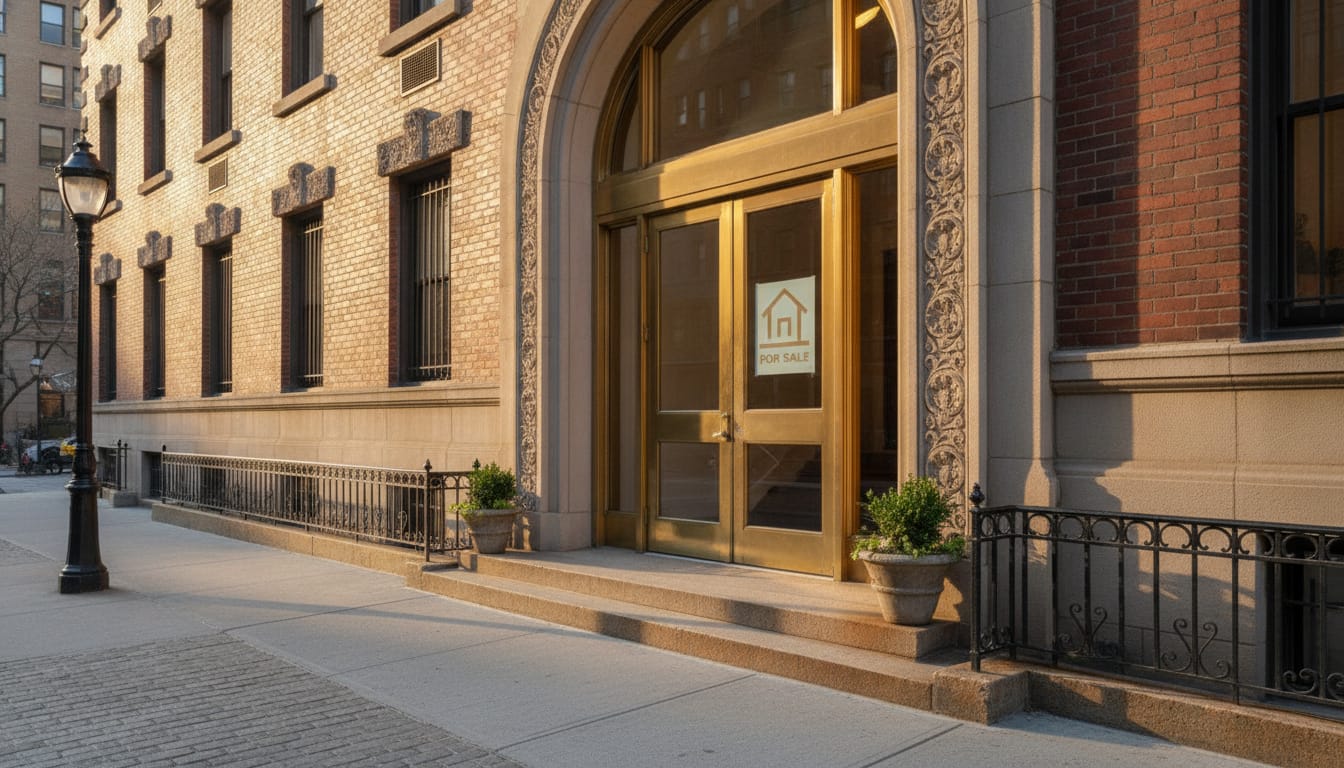
Under REBNY's rules for the RLS, a listing agreement has to reach every co-broke agent in the system the moment it goes public, not whenever the listing broker gets around to telling them. Most sellers never see how that machinery works before they sign, and the ones who ask about it upfront usually end up with a stronger plan than the ones who assume "the agent will handle it."
When the pandemic restricted in-person showings in 2020, I started shooting my own 3D virtual tours and listing videos on every property I list. Most agents who adopted that technology hired a media company to do the work; I built the workflow myself and still run it that way today. I also run channels on every major social media platform (YouTube, Instagram, Facebook, LinkedIn, TikTok, X, Threads, Pinterest), publishing listing videos, walkthroughs, and market updates for every property I represent. This guide walks through what a serious marketing plan for an NYC home actually includes, piece by piece, so you know what to ask for before you sign a listing agreement.
What "Marketing" Actually Means for an NYC Listing
Marketing a home is not one task, it is a sequence of separate pieces of work that each depend on the last one being done right. Photography and video come first because every downstream channel, portals, social media, print, all pull from the same media library. Pricing sets the tone for how that media gets received. Syndication decides who sees it. Open houses convert interest into offers. A gap in any one piece drags down the rest, no matter how good the others are.
Sellers often judge a marketing plan by the listing photos alone, because photos are the only piece they can evaluate before the home goes live. That is a mistake. The photos matter, but the syndication reach behind them and the pricing strategy around them decide whether the right buyers ever see those photos in the first place.
Photography Standards Worth Paying For
NYC apartments are small by national standards, and that makes photography harder, not easier. A wide-angle lens that distorts a 10-foot room into something that looks 14 feet creates a walkthrough disappointment that costs trust with a buyer the moment they arrive. The standards worth insisting on: full-frame or crop-sensor cameras with a true wide-angle lens (not a phone's ultra-wide setting), exposure blending or HDR to handle NYC's mixed window and interior light without blown-out windows, a twilight exterior shot for any property where the building facade is part of the pitch, and a floor plan on every listing regardless of size.
Virtual staging is standard practice on vacant units at this point, and any AI-generated or AI-enhanced image must carry a visible disclosure under the New York State Department of State's November 2025 rule. A buyer touring a virtually staged unit should never be surprised that the furniture in the photos is not the furniture in the room.
What holds up
- • True wide-angle lens, corrected for distortion
- • Exposure blending for window light
- • Twilight shot for street-facing facades
- • Floor plan on every listing
- • Disclosed virtual staging on vacant units
What falls short
- • Phone photos with no lighting correction
- • Rooms shot to look larger than they are
- • No floor plan, buyers guess the layout
- • Undisclosed AI staging or renderings
- • Photos that do not match the unit's current condition
Photography also depends on what the apartment looks like the morning of the shoot, which is the part a seller controls. The room-by-room preparation that makes a small NYC floor plan photograph well is covered in the staging playbook for NYC apartments, and it should be finished a day before the photographer arrives, not the morning of.
Listing Copy Has Legal Rules, and They Protect the Seller Too
Listing descriptions are advertising, and federal, state, and city fair housing law all govern what an advertisement for housing may say. The rule that matters most in practice is simple: describe the property, never the people. Square footage, ceiling height, exposure, prewar detail, elevator, laundry, transit access, park access, and building age are all fair game. Who lives in the building or the neighborhood is not, and neither is any phrasing that stands in for it.
Sellers sometimes read this as their agent being cautious for the agent's own sake. It is the seller's exposure too. An owner is on the hook for the advertising published on their behalf, so a description that drifts into who a home would "suit" creates a complaint risk that lands on both of you. It also produces weaker copy. A line about who would love the apartment tells a buyer nothing they can verify, while a line about the 10-foot ceilings and the two exposures gives them a reason to book a showing.

Recently Listed in NYC
Live data · Updated every 15 min · Source: REBNY RLS
View All
Listing information provided courtesy of the Real Estate Board of New York's Residential Listing Service (RLS).
Information is deemed reliable but not guaranteed. Sale listings verified.
©2026 REBNY. RLS data displayed by Keller Williams NYC.
Video Walkthroughs and 3D Tours
A 3D tour and a video walkthrough do a job that photography cannot: they let a buyer rule a property in or out before they ever schedule an in-person showing. That matters most in NYC, where buyers are frequently touring from out of state or comparing several buildings on the same weekend and cannot see everything in person. I have shot my own 3D virtual tours and listing videos on every property since 2020, and I still run that workflow myself rather than handing it to a vendor with its own schedule. For the data behind why this investment pays off in days on market and sale price, see my staging and photography ROI guide.
The point of running photography, video, the 3D tour, and social distribution under one roof is accountability. When one broker owns the whole production stack, there is one person responsible for what gets published and when, not three vendors each keeping their own timeline while a listing sits unmarketed.
Owning the stack also means the reporting is data-driven rather than anecdotal. Printed pieces and social posts for my listings carry a tracked QR code, so a seller gets a weekly read on which channel actually moved people to the listing page instead of a vague assurance that the marketing is "going well." Some of the listings I have marketed this way are at miltoncoste.com/listings.
Every piece of this runs in English and Spanish. I am a native Spanish speaker and fully bilingual, so the listing copy, the video captions, and the conversation with a Spanish-speaking buyer's agent all happen without a translation step, which matters in a city where a meaningful share of the buyer pool searches in Spanish first.
Thinking About Listing Your NYC Home?
I walk every seller through the full marketing plan, photography, video, syndication, and pricing, before we sign anything.
Schedule a Free Seller Consultation
How a Listing Actually Reaches Buyers: RLS and Co-Broke Syndication
Under REBNY's rules for New York City's Residential Listing Service, listing information has to reach every co-broke agent in the system simultaneously with any public posting, or simultaneously with the first showing, whichever happens first. That timing rule exists so no agent gets a head start on a listing before the rest of the market sees it. Depending on where the property sits, a listing may also need to run on OneKey MLS, the separate system covering Queens, Brooklyn, the Bronx, and the Hudson Valley, alongside REBNY RLS for Manhattan-based coverage. I break down exactly how the two systems reach agents in my dual MLS syndication guide.
"Public dissemination" under the same rules covers more than the MLS itself: a broker's own website, social media posts, and third-party portals like Zillow, StreetEasy, Homes.com, and Realtor.com all count. That is why a listing that only appears on one broker's site, without proper co-broke syndication, is leaving buyer-agent traffic on the table from the first day it goes live.
| Where a Listing Typically Appears |
Why It Matters |
| REBNY RLS / OneKey MLS | Reaches every co-broke agent working with a buyer |
| StreetEasy, Zillow, Realtor.com, Homes.com | Consumer search portals where buyers begin looking |
| The listing broker's own site | Full media library, unedited by a portal's compression |
| Social channels | Reaches past clients and their referral networks directly |
Open Houses: Timing and Access Rules That Shape Strategy
A listing can spend up to 14 days in a Coming Soon status before it goes active, and during that window no showings or negotiations are permitted under REBNY's rules. That period exists to build anticipation and let syndication and social distribution reach the market before the first buyer walks through the door, not to quietly test offers. Once a listing is active, co-broke rules require that any agent be given access to attend an open house with their buyer, and an agent hosting the open house may only speak with unrepresented buyers inside the unit itself, never in the building's lobby or common areas.
The practical strategy that follows from these rules: use the Coming Soon window to finish the media library, line up syndication, and build a waiting list, then schedule the first open house for the earliest weekend after the listing goes active, while interest built during Coming Soon is still fresh.
Pricing Is Part of the Marketing Plan
No amount of photography or syndication reach fixes a wrong number. An overpriced listing needs more marketing spend just to stay visible while it sits, and every additional week on market before the first price adjustment tells buyer agents the seller may be willing to negotiate further than the listing suggests. I cover the full pricing process, from comps to positioning to the overpricing trap, in pricing your NYC home to sell, and the comparative market analysis method behind it in my CMA pricing guide. Before you set that number, it helps to know what you actually keep after the sale closes; my seller net proceeds guide walks through every closing cost line item.
Co-op and condo owners face different marketing considerations too. A co-op board's approval timeline shapes how a listing gets positioned to buyer agents from the first showing, which I cover in selling a co-op versus a condo in NYC.
Questions Worth Asking Any Agent About Their Marketing Plan
Before You Sign a Listing Agreement, Ask
- Who shoots the photography and video, and is it in-house or outsourced? Ask how quickly it happens after you sign, and who owns the timeline if it slips.
- Which MLS systems will the listing run on? REBNY RLS alone, OneKey MLS alone, or both, depending on the property's location.
- What does the media library include? Photography, floor plan, video walkthrough, and a 3D tour should all be on the list, not just photos.
- How long will the property sit in Coming Soon status, and what happens during that window?
- How is the property being priced, and against which recent sales, not asking prices?
- What social channels will the listing run on, and who manages that distribution?
A seller who asks these questions before signing usually gets a stronger answer than the seller who assumes every agent's marketing plan looks the same. It does not. The gap between a listing that gets full syndication, professional photography, video, and a 3D tour, and one that gets a sign and a handful of phone photos, is often the difference between a sale in weeks and a sale that drags for months. If your home is in Manhattan, my Manhattan seller page lays out how this same plan runs on a specific listing, start to finish.
Ready to See a Full Marketing Plan for Your Home?
I will walk you through the photography, video, syndication, and pricing strategy for your specific property before you commit to anything.
Get Your Marketing Plan
Get NYC market insights delivered to your inbox
New listings, market data, and expert analysis. No spam.
We respect your privacy. Unsubscribe at any time.