A "Junior 4" in the Bronx is not a four-bedroom apartment. An "alcove studio" has no separate bedroom. A "Classic 6" is not a six-room apartment by any modern counting method. NYC real estate uses a vocabulary that has no equivalent in any other US housing market, and the definitions matter because they drive price, board requirements, and whether an apartment actually fits how you live. This guide defines every type you will encounter in an active RLS search.
In my 25+ years as a Licensed Real Estate Associate Broker covering all five boroughs, I have watched buyers lose apartments by not understanding what a seller meant by "convertible 2" or overpay for a "3BR" that was really a flex 1. The vocabulary here is not arbitrary; it reflects how pre-war buildings were designed and how the market has adapted to high-density living.
The Studio Family
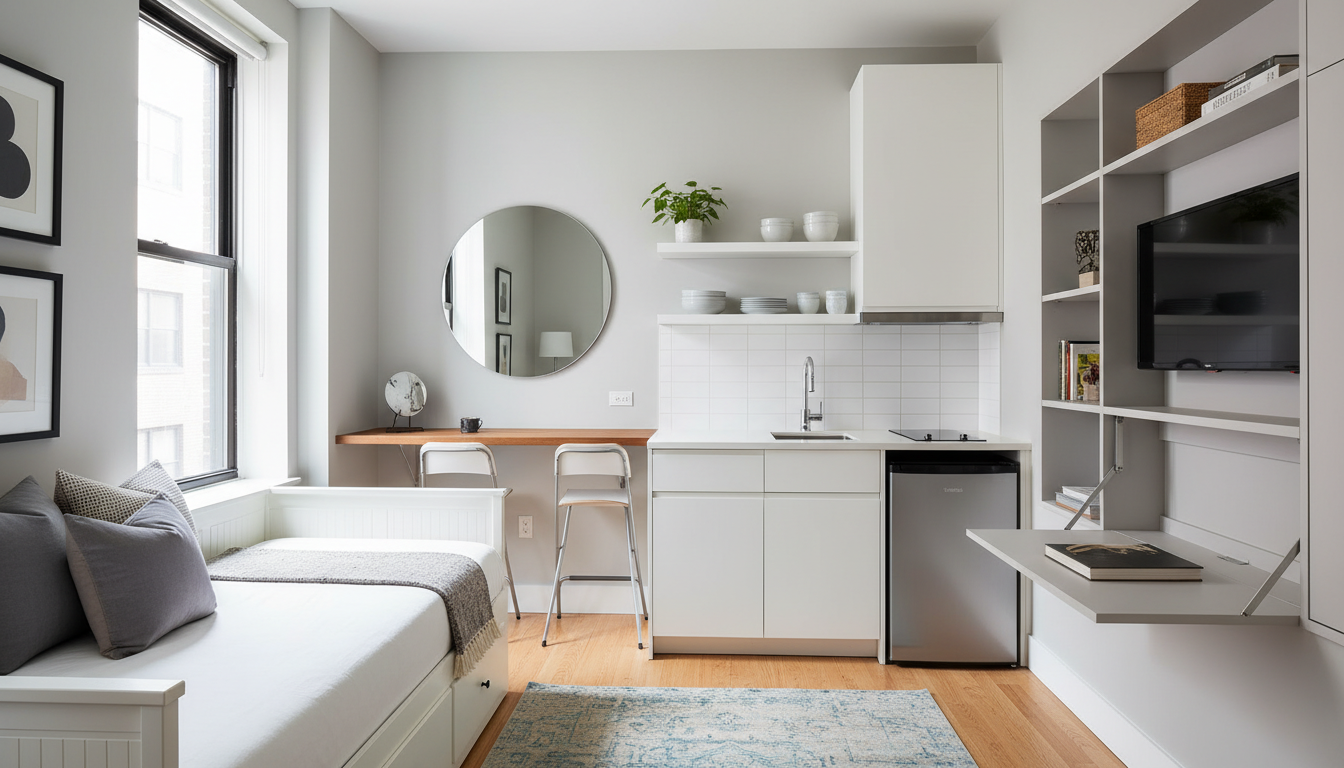
Studios are single-room apartments where the living area and sleeping area are not separated by a wall. Within that definition, NYC has three distinct subtypes:
True Studio (Open Studio): One open room with a kitchen alcove or galley kitchen and a separate bathroom. No alcove. The living and sleeping space is completely undivided. This is the most common entry-level apartment type in NYC. Sizes range from 350 to 550 square feet in pre-war buildings, smaller in post-war high-rises.
Alcove Studio: A true studio with an alcove, typically 8 to 10 feet deep by 6 to 8 feet wide, recessed off the main room. The alcove is not walled off and has no door, but it creates a semi-private space for a queen bed. For a single occupant who works from home, the alcove provides functional separation between a sleeping zone and a living zone. For two occupants, it is still a studio. Alcove studios typically command a 10% to 15% premium over open studios of similar size in the same building.
Convertible Studio (Flex Studio): An open studio with enough square footage that a partition wall or bookshelf divider could create a separate sleeping space. "Convertible" is a claim, not a guarantee. Before paying a convertible premium, measure the room and confirm that adding a partition does not violate the co-op's alteration rules. Many pre-war buildings prohibit any modification that creates a room without a window.
Junior Apartments: Junior 1 Through Junior 4
The "Junior" designation originates in pre-war and post-war co-op construction where developers created smaller layouts to maximize unit count. Junior apartments have a true bedroom but are smaller than the full-size equivalent.
Junior 1 (J1): Essentially an alcove studio with a very small separate bedroom. The bedroom typically fits a queen bed and little else. Common in 1940s and 1950s elevator buildings. Not widely listed by this name today; most are simply called studios or alcove studios.
Junior 4 (J4): The most commonly misunderstood designation. A Junior 4 is a 4-room apartment (living room, dining alcove or dining area, primary bedroom, and kitchen) with no second bedroom. The "4" refers to rooms, not bedrooms. A true Junior 4 has one bedroom. Some are "convertible Junior 4s," meaning the dining area is large enough to be walled off as a second bedroom. Junior 4s are frequently listed by agents as "1BR/convertible 2BR" or simply "2BR" when flexed. If you see a J4 listed as a 2BR, confirm whether walls are built or theoretical before visiting.
Classic Pre-War Configurations
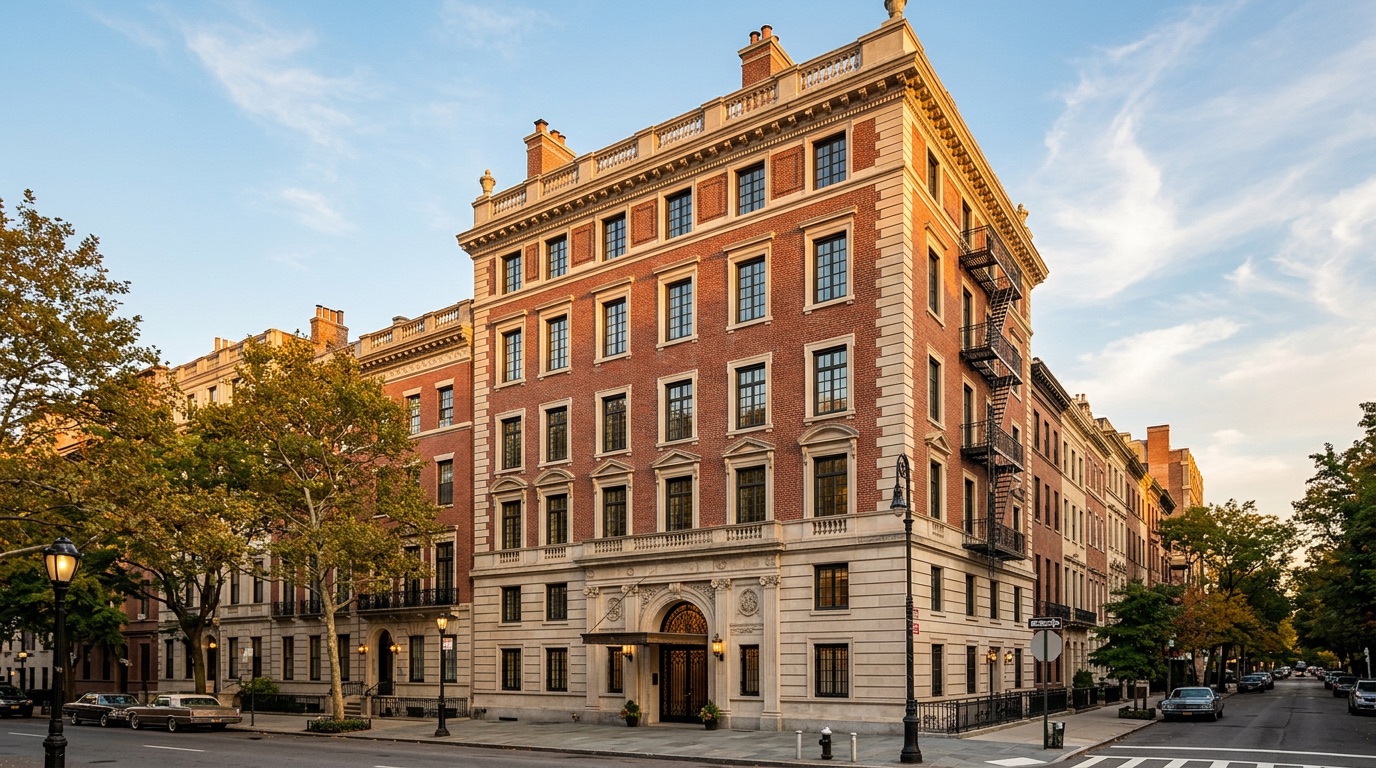
Pre-war buildings on the Upper West Side, Upper East Side, and parts of Brooklyn Heights use a room-counting system inherited from early 20th-century residential construction. "Rooms" include the living room, dining room, each bedroom, and the maid's room (if present), but do not include bathrooms or kitchens.
| Designation | Typical Layout | Bedrooms | Approx. Manhattan Range |
|---|---|---|---|
| Classic 4 | Living room, dining room, 1-2 BRs, kitchen | 1-2 | $600K-$1.2M |
| Classic 5 | Living room, dining room, 2-3 BRs, kitchen, maid's room or study | 2-3 | $900K-$2.1M |
| Classic 6 | Living room, formal dining, 3 BRs, kitchen, maid's room | 3 | $1.4M-$3.5M |
| Classic 7 | Living room, library/study, formal dining, 3-4 BRs, kitchen, maid's room | 3-4 | $2.2M-$6M+ |
| Classic 8+ | Full-floor or duplex, 4-5+ BRs, staff quarters, multiple living areas | 4-5+ | $4M+ |
The Classic 6 is the most searched pre-war layout for families relocating to Manhattan. Three bedrooms, a maid's room that converts to a home office or fourth bedroom, and formal dining. The per-square-foot price is almost always lower than a comparable modern 3BR because the layouts include foyer space, long hallways, and large kitchens that are not counted as sellable square footage in newer buildings. For families who prioritize space over modernity, a Classic 6 in an Upper West Side co-op often delivers more livable square footage per dollar than anything built after 1980.

Active Listings in NYC
Studios, Junior 4s, and Classic layouts currently on the market.

530 PARK Avenue #14H
Lenox Hill

184 KENT Avenue #A602
Williamsburg
Listing information provided courtesy of the Real Estate Board of New York's Residential Listing Service (RLS). Information is deemed reliable but not guaranteed. Sale listings verified. ©2026 REBNY. RLS data displayed by Keller Williams NYC.
Convertible Apartments: What "Flex" Actually Means
Any apartment described as "convertible" is claiming the ability to add a bedroom by adding a partition wall. The designation is not regulated and not verified. Before accepting a convertible claim, confirm three things with the listing agent: Is the partition already built? Does the co-op's alteration agreement allow new partitions? And does the proposed new room have a window, or will it require a borrowed-light solution? For a full breakdown of what co-op alteration agreements allow and prohibit, see the NYC co-op renovation rules guide.
New York City housing code (Multiple Dwelling Law Section 55) requires that every room used for sleeping have at least one window providing natural light and ventilation. "Windowless rooms" created by partitions are technically not legal sleeping rooms and cannot be listed as bedrooms on new construction, though pre-existing configurations in older buildings are sometimes grandfathered. Your real estate attorney should review any convertible configuration that involves a windowless room before you sign a contract.
True 1BR, 2BR, and 3BR: What Counts
A true bedroom has a window, a closet, and enough square footage to fit a full or queen bed with a path around it. Post-war and new development listings are generally consistent about this. Pre-war listings and co-op listings from the 1950s and 1960s are less so. When reviewing any listing that seems to have an unusually high bedroom count for its price, walk through the floor plan and confirm that each "bedroom" meets minimum habitable conditions.
One pattern worth knowing: a "3BR" in a post-war co-op in Queens or the Bronx at $400,000 to $600,000 frequently has two full bedrooms and one very small third room that qualifies as a bedroom by NYC code but fits only a twin bed or works better as a home office. This is not deceptive marketing. It is a genuine bedroom by code, at a price that reflects its size. Understanding what you are actually getting avoids the surprise of arriving at a showing expecting a full-size third bedroom.
Pre-War Building Types
- • Classic 4/5/6/7: room count, not bedroom count
- • Junior 4: one bedroom, dining alcove
- • Alcove studio: semi-private sleeping nook
- • Often larger square footage per dollar
- • High ceilings, thick walls, real plaster
Post-War and New Development
- • Bedroom count is literal (1BR = 1 bedroom)
- • More consistent square footage claims
- • Lower ceilings, thinner walls, less storage
- • Often higher price per square foot
- • Condo ownership more common
For a deeper comparison of property type tradeoffs, see the co-op vs. condo guide. For neighborhood-level price data by apartment type, see the NYC market reports index. If you are just starting your NYC property search, the NYC buyer guide covers the full process from pre-approval to closing.
Searching for Your First NYC Apartment?
Milton Coste helps buyers across all five boroughs cut through the jargon and find the right apartment at the right price. Schedule a free consultation.
NYC Buyer Guide