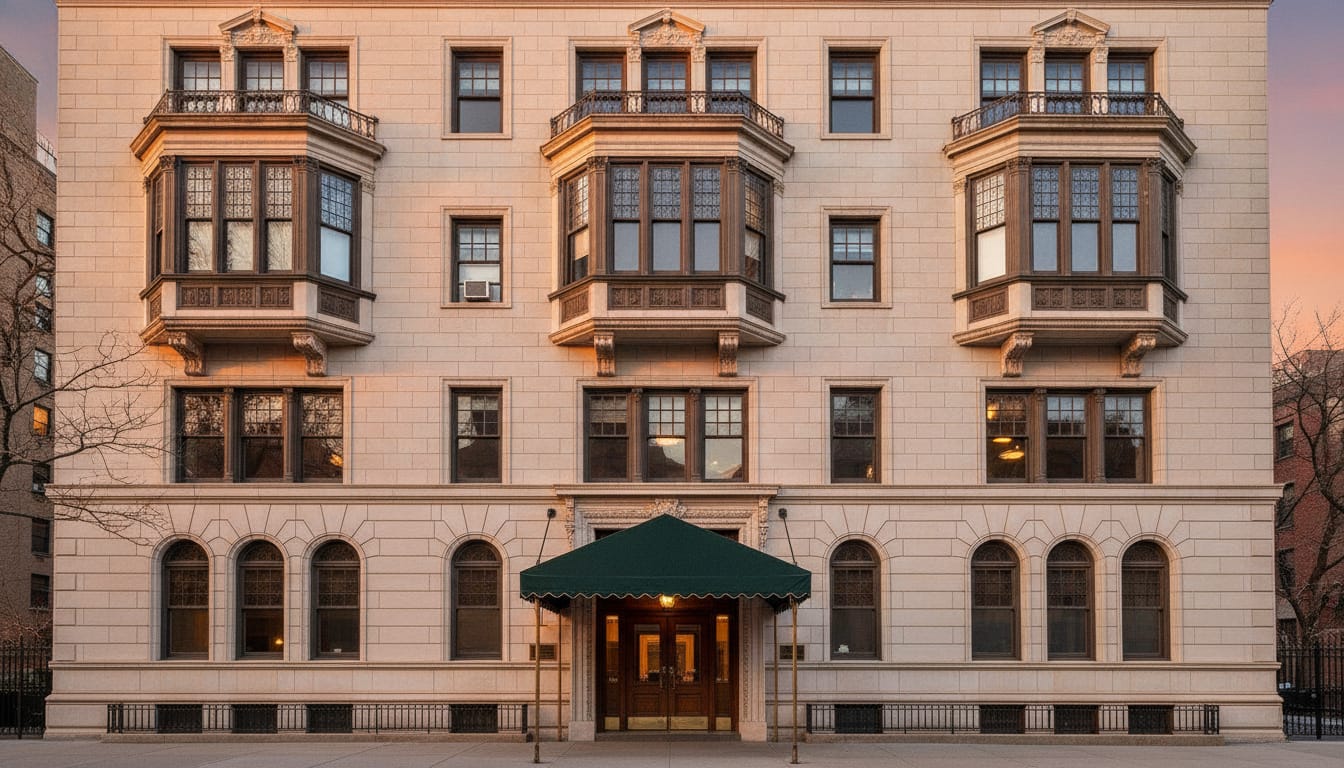
220 Central Park South on the Pied-a-Terre Tax Roll
The Department of Finance lists 89 of 117 lots at 220 Central Park South at or over $1,000,000. Here is what the roll shows and what it does not.
Milton Coste, Licensed Real Estate Associate Broker•Keller Williams NYC•NY Lic. #10301213304
October 9, 2026• 5 min read•25+ Years Experience
Facts checked October 9, 2026. Roll data: Department of Finance supplemental roll of July 24, 2026.
The Department of Finance lists 89 of the 117 lots at 220 Central Park South at or above the $1,000,000 valuation line, which adds up to $12,298,430 a year in pied-a-terre surcharge at Phase 1 rates if every one of them were taxed. That makes it the fifth-highest building by exposure among the 2,502 buildings with at least one unit over the line, and it accounts for about 10% of the $118 million in exposure across the 57 buildings in the Central Park South area.
I run the surcharge math on every second-home purchase I price, and I read this roll the way a buyer's attorney will: not as a list of who owes, but as a map of where the cost question is likely to come up in a contract. Appearing on the roll does not mean a property owes the surcharge, and the Department of Finance says so itself. A unit that is someone's primary residence is exempt. Everything below is the maximum the roll implies, not a forecast of what gets billed. You can see every figure for the building on its building page.
The numbers on the roll
Measure
220 Central Park South
Lots on the roll
117
Lots at or over $1,000,000
89
Lots under $1,000,000
28
Highest valuation on the roll
$15,553,855
Median valuation across all 117 lots
$1,998,074
Annual surcharge if every lot over the line were taxed
$12,298,430
The 28 lots under $1,000,000 matter for reading the median. The roll counts every lot in the condominium that carries a value, so the $1,998,074 median reflects the whole building, not just the apartments that cross the line. The lowest value on the roll is $223,868.
Where the 89 lots fall in the rate bands
Phase 1 rates apply to the full valuation, not the amount above the line, so the band a lot lands in sets the whole bill. Most of the lots here sit in the lowest band, but the money does not: the 33 lots above $3,000,000 produce about 65% of the building's exposure.
Band (DOF valuation)
Annual rate
Lots
Valuation range
Annual surcharge, all lots
$1,000,000 to $2,999,999
4.00%
56
$1,460,634 to $2,745,783
$4,277,186
$3,000,000 to $4,999,999
5.25%
29
$3,204,241 to $4,553,202
$5,767,134
$5,000,000 and above
6.50%
4
$5,609,775 to $15,553,855
$2,254,110
The arithmetic is simple enough to check by hand. A lot valued at $2,000,000 owes 4% of $2,000,000, which is $80,000 a year. A lot valued at $4,000,000 owes 5.25% of $4,000,000, which is $210,000. The four lots at $5,000,000 and above carry 6.5%, and the top one on the roll, at $15,553,855, would owe about $1.01 million a year if taxed.
Own or considering a unit near this line?
Enter the address and I will show the Department of Finance value on record, the band it falls in, and the exemption that fits your situation.
Who lives in a unit. The roll carries a value, not a residency finding. A lot over the line can be a full-time home and exempt.
What anyone paid. The Department of Finance values condominiums on a rental-income method that generally runs below sale prices, so these figures are not sale prices and should not be read as one.
Which lots will be billed. The September 29 court ruling ordered the city to rebuild its list from individual determinations, and the city is appealing. See what the appeal means for a notice holder.
I have chosen to publish building-level and band-level figures only. The roll is public, but I do not attach owner names to it, and I do not think a buyer or seller needs them to price the cost.
NYC Condos $1M and Up
Manhattan and Brooklyn condos in the price range the surcharge reaches
For a buyer, the surcharge is an annual line next to common charges and property tax, and at this building's valuations it is not small. A buyer who will live in the apartment full time files for the exemption and the line goes to zero. A buyer who will use it part of the year should price the band the unit sits in. For a seller, expect buyer's counsel to ask for the unit's Department of Finance valuation and for residency proof, and to raise proration language in the contract. The pied-a-terre buying guide covers which buildings allow part-time owners at all, and the pied-a-terre tax hub has the same roll for every other building.
This is general information, not legal or tax advice. Confirm your own filing with a New York real estate attorney or your CPA.
Sources
Facts on this page were checked against these sources on October 9, 2026.
NYC Department of Finance, Supplemental Market Value Roll, tax year 2027, published July 24, 2026, analyzed by miltoncoste.com, building and lot values
Send the address you are looking at. The report covers what the listing leaves out: the recorded sale history, the tax and abatement picture, open building violations and permits, and the closed sales that set the price. Milton prepares it from public records. Free, no obligation.